
In short: An osteopath works mainly with their hands: they assess how your joints, muscles and soft tissues move and use manual techniques, from gentle to firmer ones. For nonspecific low back pain, studies show a moderate benefit for pain and function [1][2], but the quality of the evidence is limited. Osteopathy does not suit every problem, and some symptoms need a doctor first. If you are looking for an osteopath in Chișinău, here is what to expect.
What an osteopath does
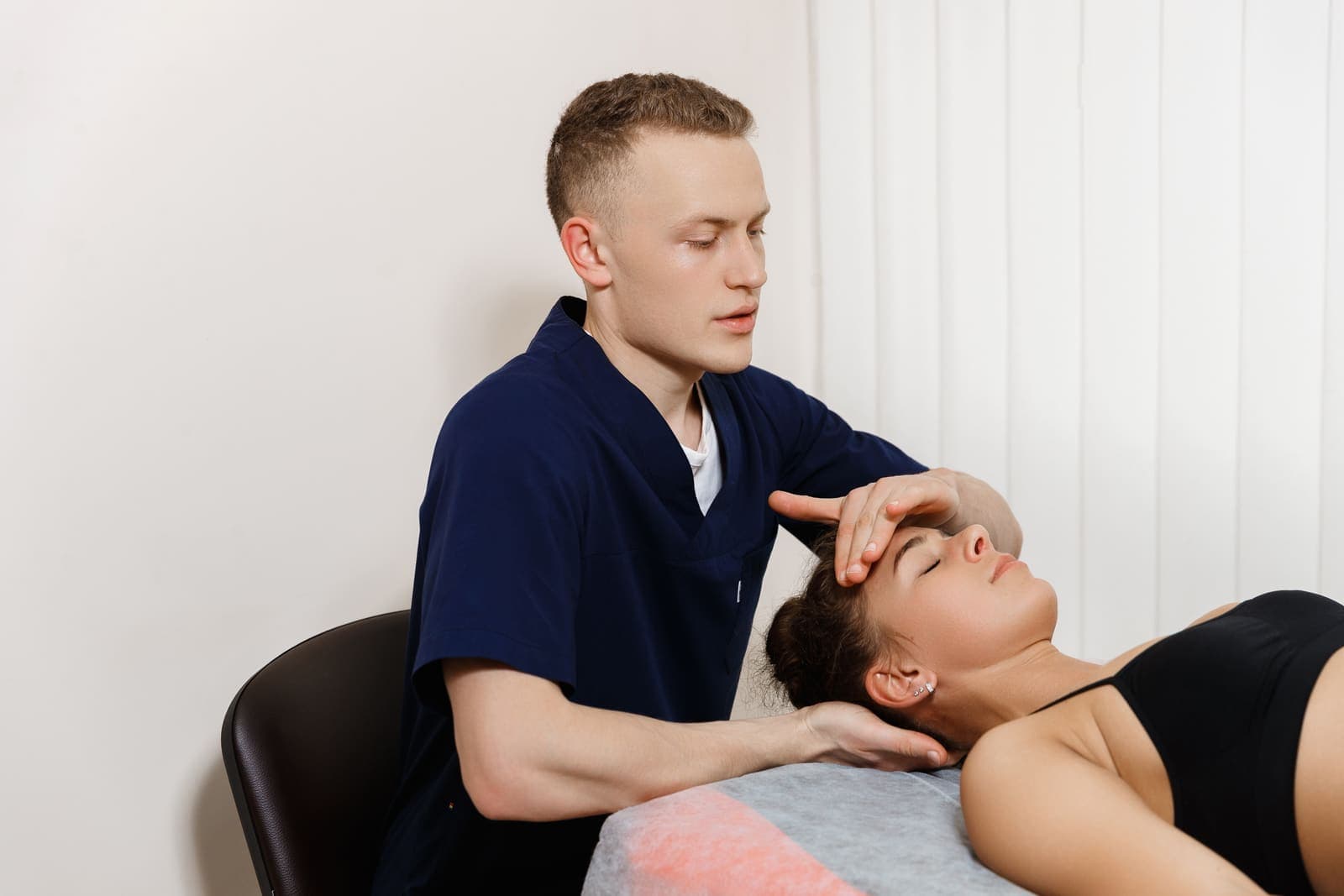
Osteopathy is a form of manual therapy. An osteopath starts from the idea that pain does not always come from where you feel it: a stiff pelvis, upper back or hip, for example, can put extra load on the lower back. So they look at the whole body, not only at the sore spot.
Common techniques include:
- gentle joint mobilisation without sudden movements;
- massage and muscle stretching;
- work on fascia (the connective tissue that wraps muscles), also called myofascial release;
- sometimes quick joint manipulation, the kind that makes a “click”. This is optional and should not be done without your agreement.
How a session goes
The first visit usually starts with a conversation: how long you have had the pain, what makes it better or worse, what work you do, what illnesses you have had and what treatment you are on. Then comes the examination: the practitioner watches how you stand, bend and walk, tests your range of movement and feels tissue tension with their hands.
Treatment itself is usually done on a couch, in comfortable clothes. Tell the therapist if a technique bothers you. A stretching feeling or mild tenderness after the session is common, but strong pain should not be endured in silence. At the end you normally get advice: which movements to avoid for a few days, which exercises to do at home and whether another session makes sense.
What the studies say
Most of the evidence is about nonspecific low back pain, meaning back pain without a clear structural cause.
- A review of 15 randomised trials found moderate-quality evidence that osteopathic treatment reduces pain and improves function in acute and chronic low back pain at 3 months. This also applied in pregnancy and after birth. The authors note that larger, better trials are needed [1].
- Another review, of 10 trials in chronic nonspecific low back pain, found osteopathy did better than control groups for pain and function. No trial was fully at low risk of bias, and myofascial release techniques had the strongest evidence [2].
- For back and pelvic pain in pregnancy, manual therapies (mostly massage and osteopathy) helped compared with usual care, but not compared with a sham procedure. The evidence is limited [3].
The honest conclusion: osteopathy may help some people with low back pain, but we cannot say how much of the effect comes from the technique itself and how much from touch, attention and the movement that follows. For other body areas or conditions, the studies above do not allow conclusions.
When it makes sense
A visit to an osteopath may be reasonable if:
- you have nonspecific low back pain with no warning signs that lingers or keeps coming back;
- you feel stiff after long hours at a desk and want a hands-on approach alongside exercise;
- you are pregnant or recently gave birth and have back or pelvic pain, with the agreement of the doctor who follows you.
Usually the most sensible plan combines manual therapy with active movement. Hands can ease pain for a while, but muscles get stronger through exercise. For causes and what generally helps, see our article on low back pain.
When to see a doctor first
Some symptoms call for a medical assessment before any manual therapy:
- pain that began after a fall, a blow or an accident;
- fever, unexplained weight loss or a history of cancer;
- pain that does not ease at all with rest or wakes you at night;
- numbness in the groin or saddle area, or problems with urination or bowel control;
- weakness that is getting worse in a leg or an arm;
- chest pain, dizziness or an unusually severe headache.
It is the doctor, or an initial assessment, who decides who should not have manual treatment, for example in significant osteoporosis, certain inflammatory diseases or after some surgeries. If your pain runs down the leg, also read about sciatica and disc herniation.
Frequently asked questions
How long is a session and how many do I need?
It varies by practitioner, usually 30 to 60 minutes. The number of sessions depends on the problem and how your body responds. If you notice no change after a few sessions, it is reasonable to review the plan with the therapist or your doctor.
Are joint clicks dangerous or necessary?
They are not necessary. Many osteopathic techniques involve no clicking manipulation at all. If you do not want it, say so at the start. Risks depend on your health, which is why assessment before treatment matters.
Does osteopathy replace kinesiotherapy?
No. They are different approaches that can complement each other. Manual therapy may make movement easier, and kinesiotherapy helps you keep the result through tailored exercises.
Where can I find an osteopath in Chișinău?
Vertebrick is a kinesiotherapy clinic in Chișinău at bd. Traian 12/2. If you are looking for an osteopath in Chișinău, book online and tell us what is bothering you. We will carry out an assessment, explain which approach makes sense in your case, including whether manual therapy fits, and refer you to a doctor if we notice warning signs. Book online.
Book an assessment
Come in for an assessment at Vertebrick, 12/2 Traian Blvd, Chișinău, Moldova. We are open Monday to Saturday, 08:00–20:00.
📞 +373 69 82 62 12 · WhatsApp: wa.me/37369826212 · Fill in the form
Author: the Vertebrick team, physiotherapy clinic in Chișinău. This article is for information only and does not replace a medical consultation.
Sources
- Franke H, Franke JD, Fryer G. Osteopathic manipulative treatment for nonspecific low back pain: a systematic review and meta-analysis. BMC Musculoskelet Disord. 2014. doi:10.1186/1471-2474-15-286
- Dal Farra F, Risio RG, Vismara L, Bergna A. Effectiveness of osteopathic interventions in chronic non-specific low back pain: a systematic review and meta-analysis. Complement Ther Med. 2021. doi:10.1016/j.ctim.2020.102616
- Hall H, Cramer H, Sundberg T, et al. The effectiveness of complementary manual therapies for pregnancy-related back and pelvic pain: a systematic review with meta-analysis. Medicine (Baltimore). 2016. doi:10.1097/md.0000000000004723