
In short: Your first visit to a kinesiotherapist (physiotherapist) is a full assessment, not a quick massage. The specialist asks about your pain, tests how you move and how strong you are, explains what they think is going on, and you leave with a clear plan: what to do at home, which treatments make sense and when you should notice a change. Below is what to bring, what to wear and which questions are worth asking.
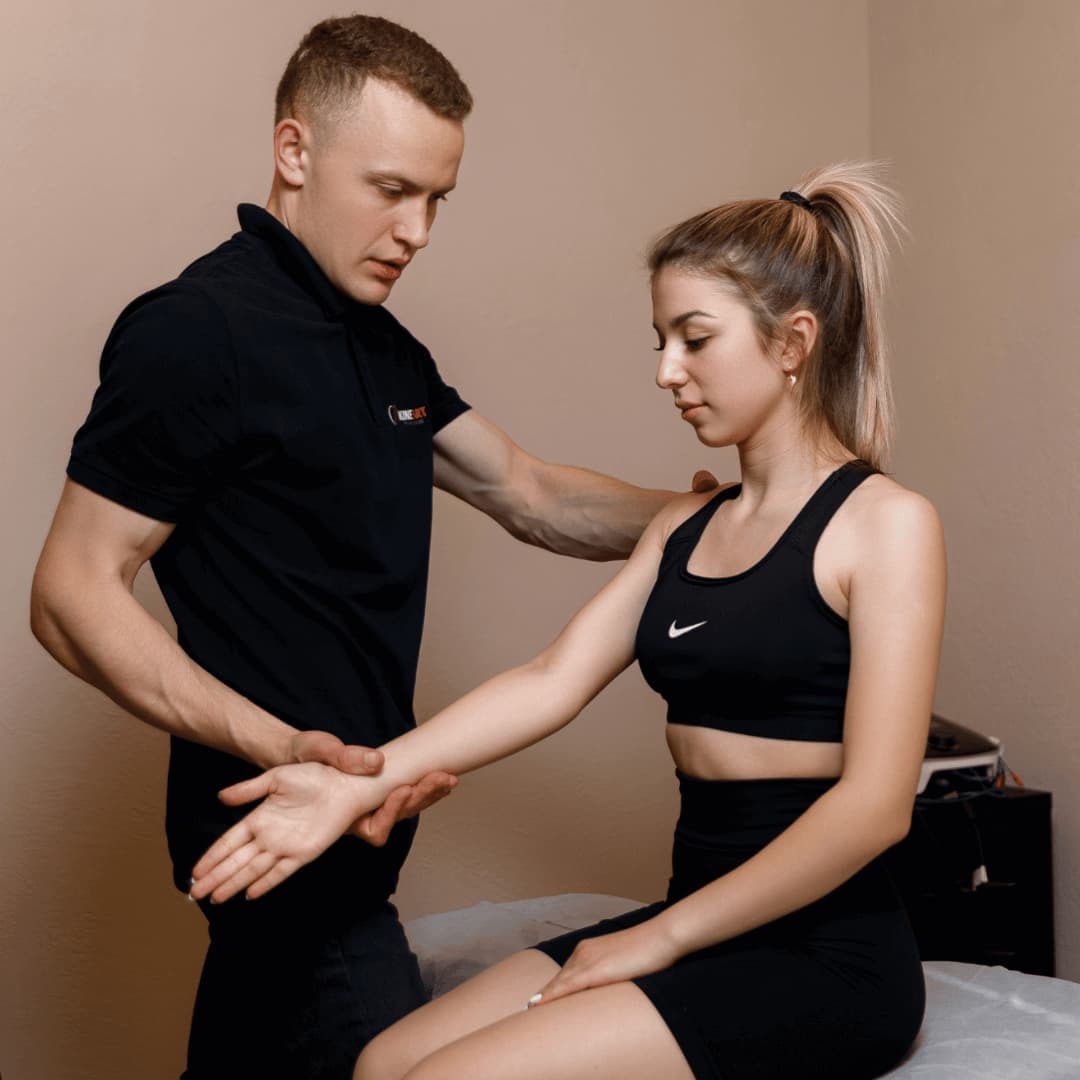
Why the first visit is an assessment
The same back pain can have different causes, and a treatment picked at random may not help or may even make things worse. So at the first visit we do not jump straight into exercises or machines. First we find out where the problem comes from, what makes it worse and what eases it, and only then choose the method. If you want to understand the difference between specialists, read our article on physiotherapists, kinesiotherapists and massage therapists.
What to bring
- Any scans you have: MRI, X-ray, ultrasound, with their reports.
- Your doctor's notes, discharge papers or referrals.
- A list of your medicines, especially blood thinners or painkillers.
- Comfortable clothes: tracksuit bottoms or shorts and a T-shirt; for the shoulder or back, a vest top is ideal.
- The shoes you wear every day, if the problem is in the foot, knee or hip.
No scans? That is fine. Many muscle and joint problems do not need an MRI. If the specialist thinks you need one, they will tell you.
How the assessment goes
- The talk. When the pain started, where you feel it, how it changes during the day, what it stops you doing. We also ask about sleep, work, sport and other health problems.
- Checking for warning signs. Some symptoms need a doctor first (for example numbness around the groin, sudden leg weakness, fever). If we notice them, we refer you to a doctor before treatment.
- Movement tests. How you bend, lift your arm and walk; muscle strength; reflexes and sensation if needed.
- The explanation. In plain words, what we think is causing the pain and what is not dangerous.
Everything is done only with your consent. You can always ask why we do a test or say no to a technique.
What you leave with
- 2–4 simple exercises that you understand and can do correctly;
- advice for the next few days: how to sit, sleep and how much to move;
- a plan: roughly how many sessions, how often, and which treatments may help (manual therapy, therapeutic massage, needling, devices);
- a clear marker for judging progress, such as climbing stairs without pain.
The sessions that follow
At each session we check what has changed, correct your exercises and make them harder when your body is ready. If there is no progress after a few sessions, we change the approach or refer you to a doctor. The aim is for you to need us for as short a time as possible and to know what to do on your own.
A few useful rules
- Arrive 5 minutes early.
- If you cannot come, let us know at least 24 hours in advance.
- Write your questions down before the visit so you do not forget them.
Frequently asked questions
Do I need a doctor's referral?
Not for an assessment. If you already have a referral or a diagnosis, bring it; it helps.
How much does the first visit cost?
Current prices are on the Services page or by phone.
Where can I get a physiotherapy assessment in Chișinău?
At Vertebrick, bd. Traian 12/2, Monday to Saturday, 08:00–20:00. You can book online or call +373 69 82 62 12.

Book an assessment
Come in for an assessment at Vertebrick, 12/2 Traian Blvd, Chișinău, Moldova. We are open Monday to Saturday, 08:00–20:00.
📞 +373 69 82 62 12 · WhatsApp: wa.me/37369826212 · Fill in the form
Author: the Vertebrick team, physiotherapy clinic in Chișinău. This article is for information only and does not replace a medical consultation.