
In short: Acupuncture and dry needling use the same thin, sterile, single-use needles, but they start from different ideas. Traditional acupuncture works on fixed points along "meridians", while dry needling targets trigger points: tender, tight spots in a muscle. For chronic pain, large studies show a real but moderate effect [1], and dry needling for neck and back pain does well in the short term [2][3]. Needles do not replace exercise. They help most as part of a rehab plan.

What acupuncture is
Traditional Chinese acupuncture places needles in points drawn on maps that are centuries old, based on the idea of energy flowing through meridians. There is also Western medical (clinical) acupuncture: the same needles, but the points are chosen by anatomy, nerves and muscles, not by meridians. This is the approach our specialist is trained in. We do not practise traditional meridian acupuncture.
What dry needling is
"Dry" means nothing is injected. The therapist feels for a trigger point, a small tender knot in a muscle that can send pain somewhere else (for example from the shoulder up into the head). The needle goes straight into that point. The muscle often answers with a small twitch and then relaxes. We have written more about trigger points and about the benefits of dry needling.
The difference in short
- Logic: traditional acupuncture follows meridians; dry needling follows anatomy and the painful muscle.
- Where: acupuncture needles can be far from the painful area; dry needling usually goes right into the affected muscle.
- How long: acupuncture needles often stay in for 15–30 minutes; in dry needling the needle goes in and out within seconds or minutes.
- How it feels: dry needling can cause a brief, cramp-like ache when the muscle twitches.
Western medical acupuncture sits in between: points chosen by anatomy, but needles left in for a while.
What the research says
A large analysis of individual data from more than 20,000 patients in 39 good-quality trials found that acupuncture reduced chronic back, neck, shoulder and knee pain and headaches more than no acupuncture (a moderate effect) and slightly more than sham acupuncture (a small effect). Most of the effect was still there after a year [1].
For dry needling, a review of 14 trials in people with chronic neck pain found better pain and function in the short and medium term, with no serious side effects reported [2]. For muscular low back pain there is less evidence: needling can reduce pain right after treatment, but we do not yet know how long that lasts [3].
The honest conclusion: both methods can help, mostly in the short term, but neither is a stand-alone fix. They open a window in which moving hurts less, and that window should be used for exercise.
Does it hurt? Possible side effects
The needles are very thin, much thinner than those used for injections. Most people feel a light prick or a dull ache, and with dry needling a brief cramp. After a session you may have:
- muscle soreness, like after a workout, for 1–2 days;
- a small bruise;
- rarely, dizziness or feeling faint, especially if you are scared of needles.
Serious problems are rare when a trained specialist uses sterile single-use needles.
Who should avoid needles
Tell the therapist if you take blood thinners, have a bleeding disorder, are pregnant, have a skin infection in the area, a weakened immune system, epilepsy or a strong fear of needles. In these cases a doctor or the specialist decides whether the technique suits you or whether another method, such as manual therapy or exercise, is a better choice.
Frequently asked questions
Which should I choose: acupuncture or dry needling?
It depends on where the pain comes from. If it comes from a tight muscle with clear trigger points, dry needling is usually the logical choice. If the pain is more widespread or long-standing, medical acupuncture can be an option. The decision is made after an assessment.
How many sessions will I need?
Many people notice a change after 1–3 sessions. If there is no progress after a few sessions, it makes sense to change the approach rather than keep going.
Where can I get dry needling or medical acupuncture in Chișinău?
At Vertebrick, bd. Traian 12/2. We start with an assessment, then combine needling with exercise and, if needed, manual therapy. You can book online. If you have back or neck pain, see also our articles on low back pain and neck pain.
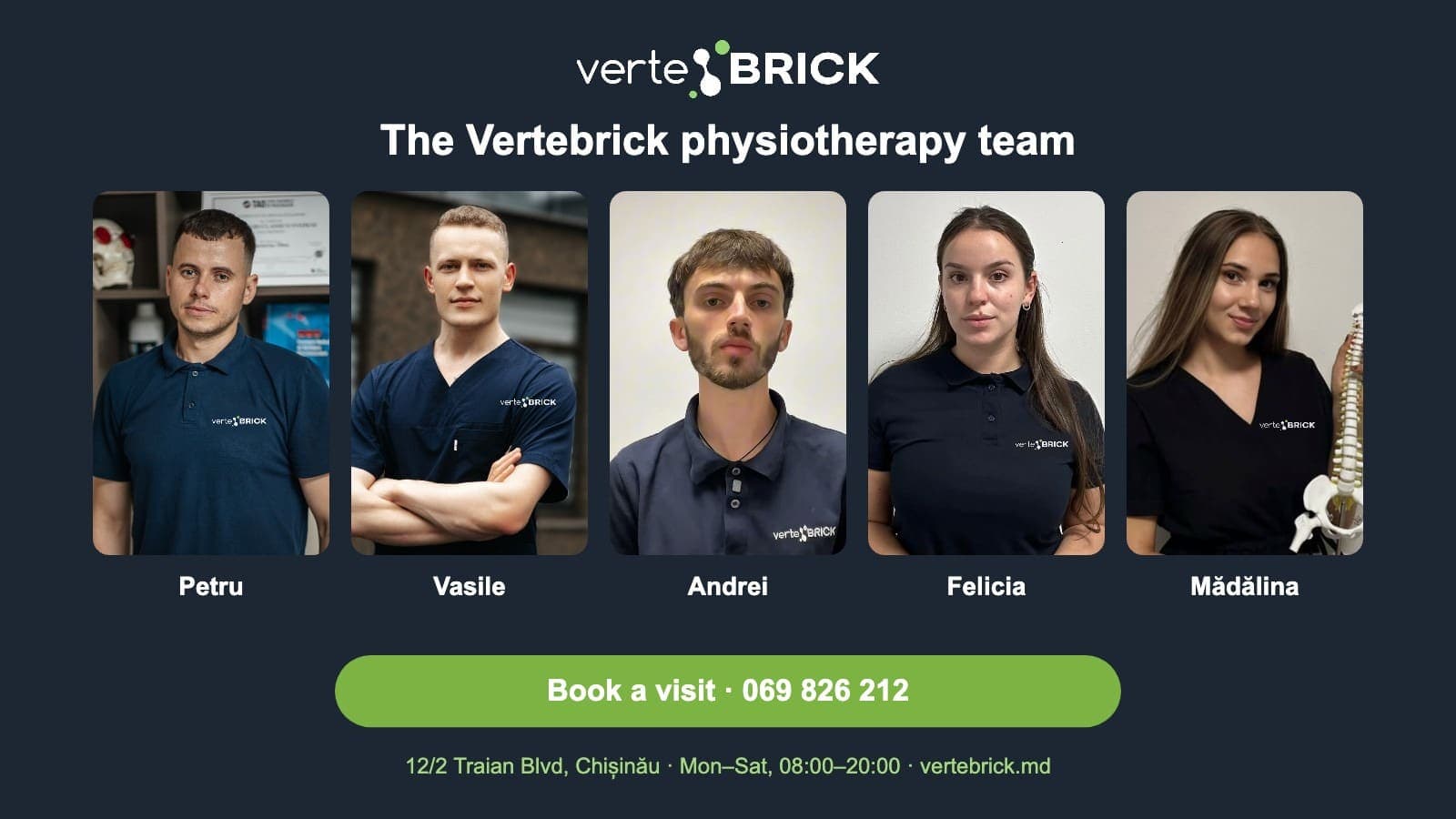
Book an assessment
Come in for an assessment at Vertebrick, 12/2 Traian Blvd, Chișinău, Moldova. We are open Monday to Saturday, 08:00–20:00.
📞 +373 69 82 62 12 · WhatsApp: wa.me/37369826212 · Fill in the form
Author: the Vertebrick team, physiotherapy clinic in Chișinău. This article is for information only and does not replace a medical consultation.
Sources
- Vickers AJ, Vertosick EA, Lewith G, et al. Acupuncture for chronic pain: update of an individual patient data meta-analysis. J Pain. 2018. doi:10.1016/j.jpain.2017.11.005
- Hernández-Secorún M, Abenia-Benedí H, Borrella-Andrés S, et al. Effectiveness of dry needling in improving pain and function in comparison with other techniques in patients with chronic neck pain: a systematic review and meta-analysis. Pain Res Manag. 2023. doi:10.1155/2023/1523834
- Dach F, Ferreira KS. Treating myofascial pain with dry needling: a systematic review for the best evidence-based practices in low back pain. Arq Neuropsiquiatr. 2023. doi:10.1055/s-0043-1777731